
Masculinity in Costume
The Performative Male
Masculinity in Costume
The Performative Male
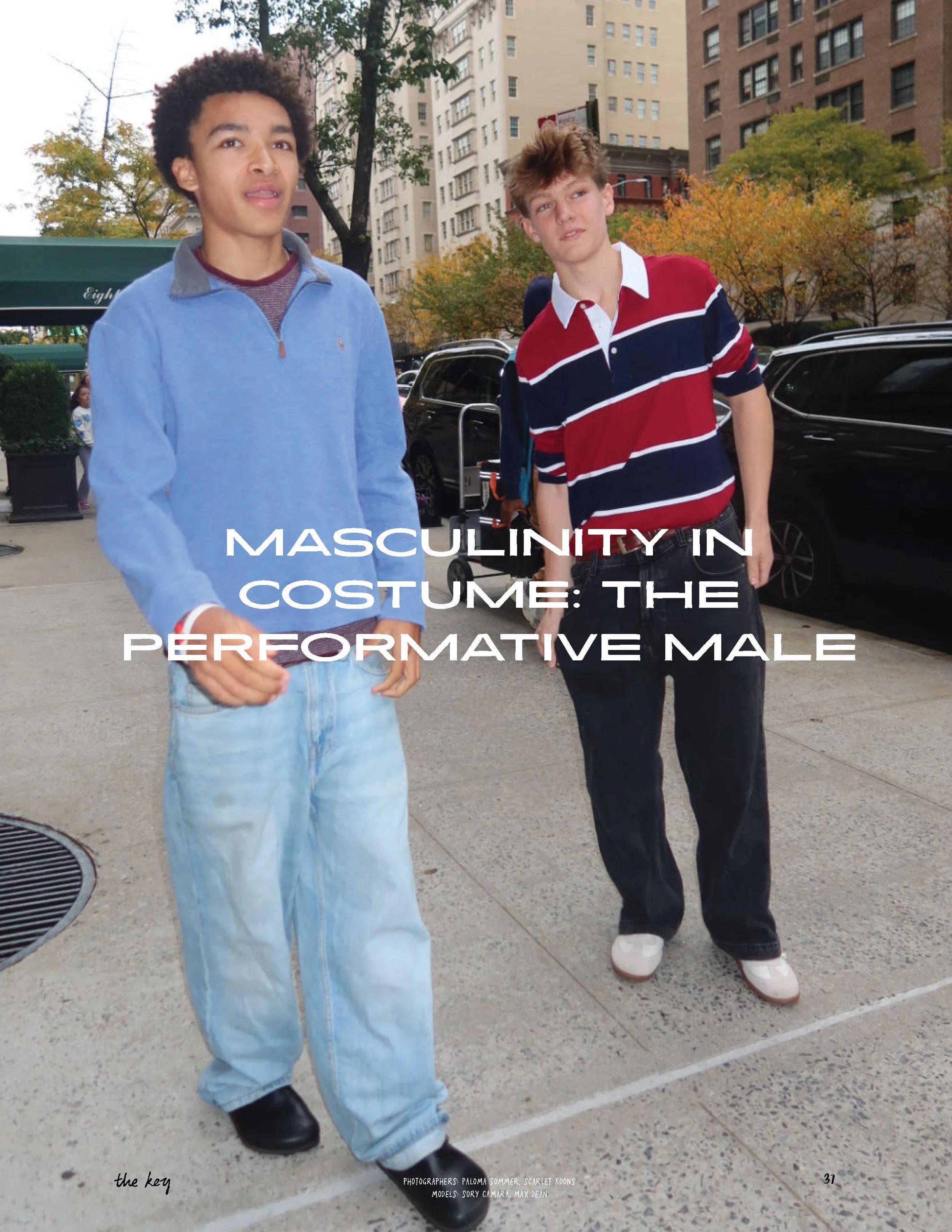
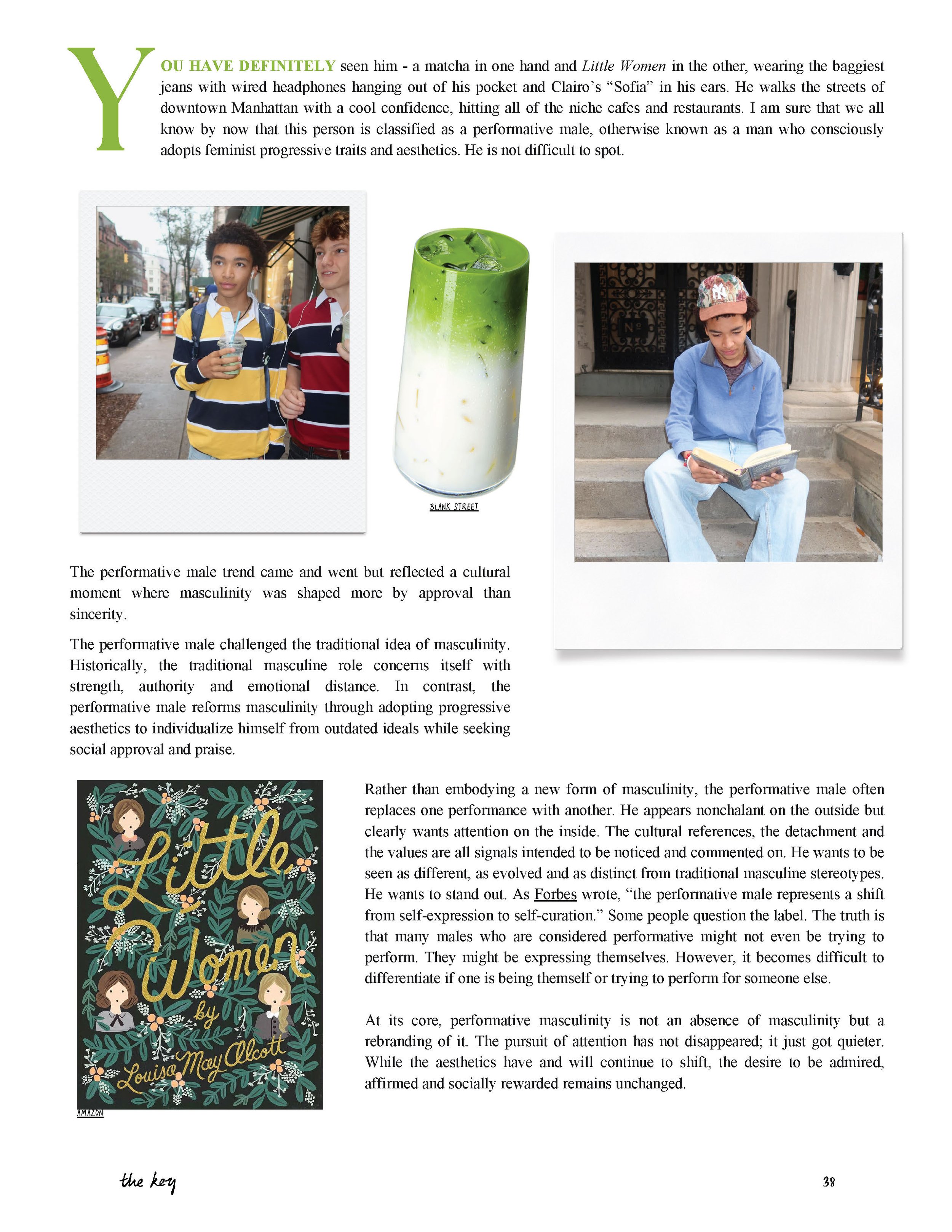
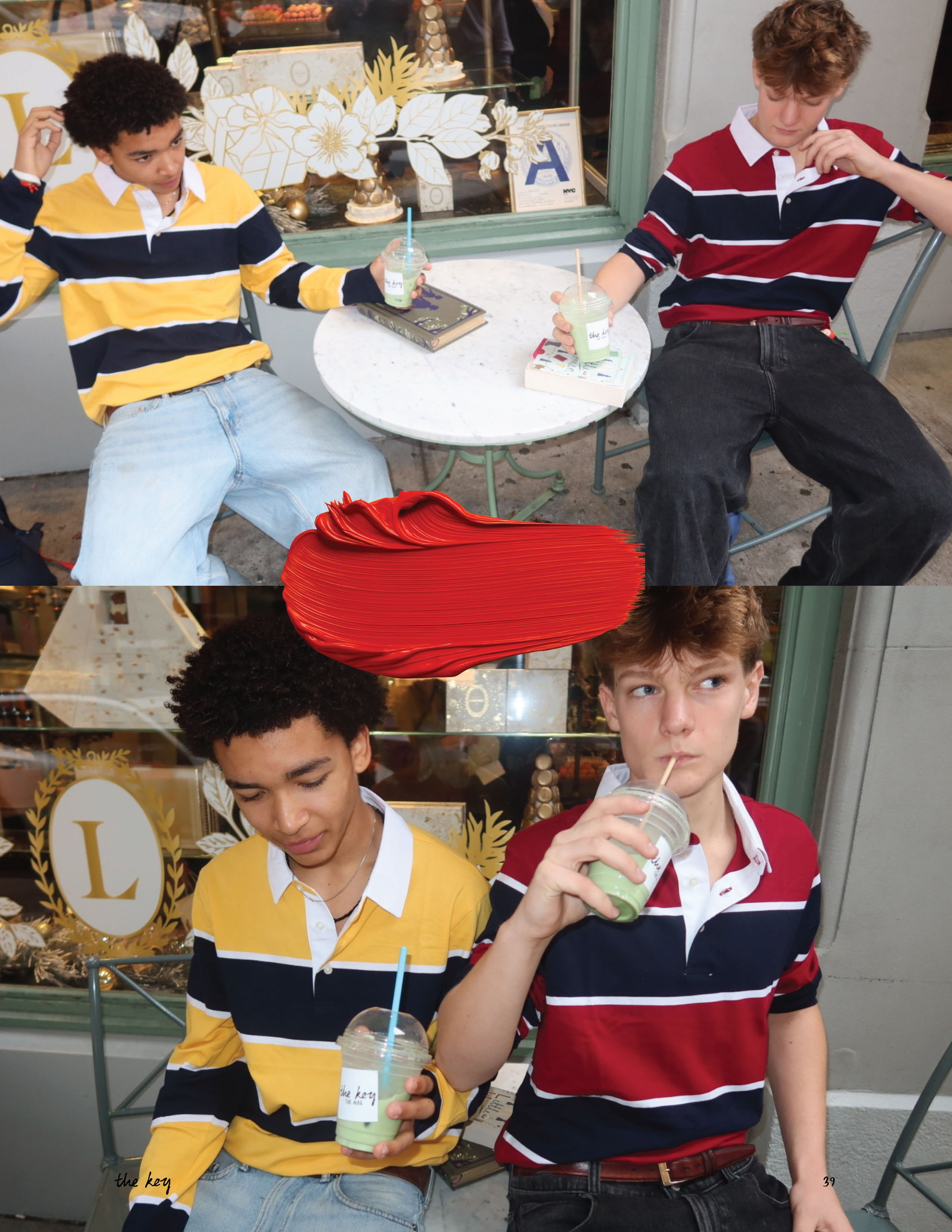
You have definitely seen him - a matcha in one hand and Little Women in the other, wearing the baggiest jeans with wired headphones hanging out of his pocket and Clairo’s “Sofia” in his ears. He walks the streets of downtown Manhattan with a cool confidence, hitting all of the niche cafes and restaurants. I am sure that we all know by now that this person is classified as a performative male, otherwise known as a man who consciously adopts feminist progressive traits and aesthetics. He is not difficult to spot.
The performative male trend came and went but reflected a cultural moment where masculinity was shaped more by approval than sincerity.
The performative male challenged the traditional idea of masculinity. Historically, the traditional masculine role concerns itself with strength, authority and emotional distance. In contrast, the performative male reforms masculinity through adopting progressive aesthetics to individualize himself from outdated ideals while seeking social approval and praise.
Rather than embodying a new form of masculinity, the performative male often replaces one performance with another. He appears nonchalant on the outside but clearly wants attention on the inside. The cultural references, the detachment and the values are all signals intended to be noticed and commented on. He wants to be seen as different, as evolved and as distinct from traditional masculine stereotypes. He wants to stand out. As Forbes wrote, “the performative male represents a shift from self-expression to self-curation.” Some people question the label. The truth is that many males who are considered performative might not even be trying to perform. They might be expressing themselves. However, it becomes difficult to differentiate if one is being themself or trying to perform for someone else.
At its core, performative masculinity is not an absence of masculinity but a rebranding of it. The pursuit of attention has not disappeared; it just got quieter. While the aesthetics have and will continue to shift, the desire to be admired, affirmed and socially rewarded remains unchanged.