
Step Inside Lucia Hierro’s Bodega

Step Inside Lucia Hierro’s Bodega
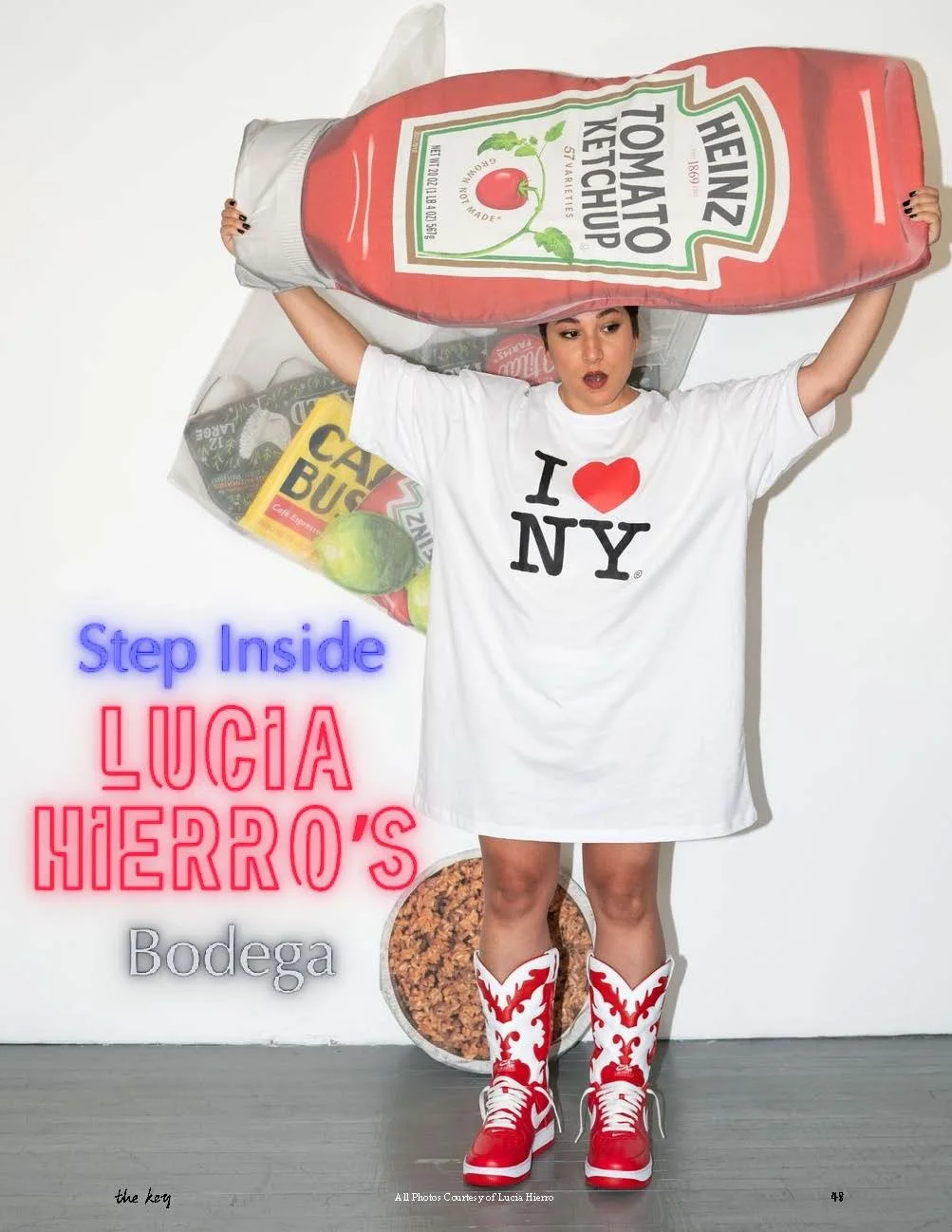
Dominican American conceptual artist Lucia Hierro is a stone throw away from us―literally. She lives and works in the Bronx where we attend school. Currently, her work hangs alongside some of our favorites at the Guggenheim (she is the first female Dominican artist to enter the Guggenheim collection), a surreal feeling for the 38-year-old artist. “Right now I am at the Gugg with my heroes” she shares.
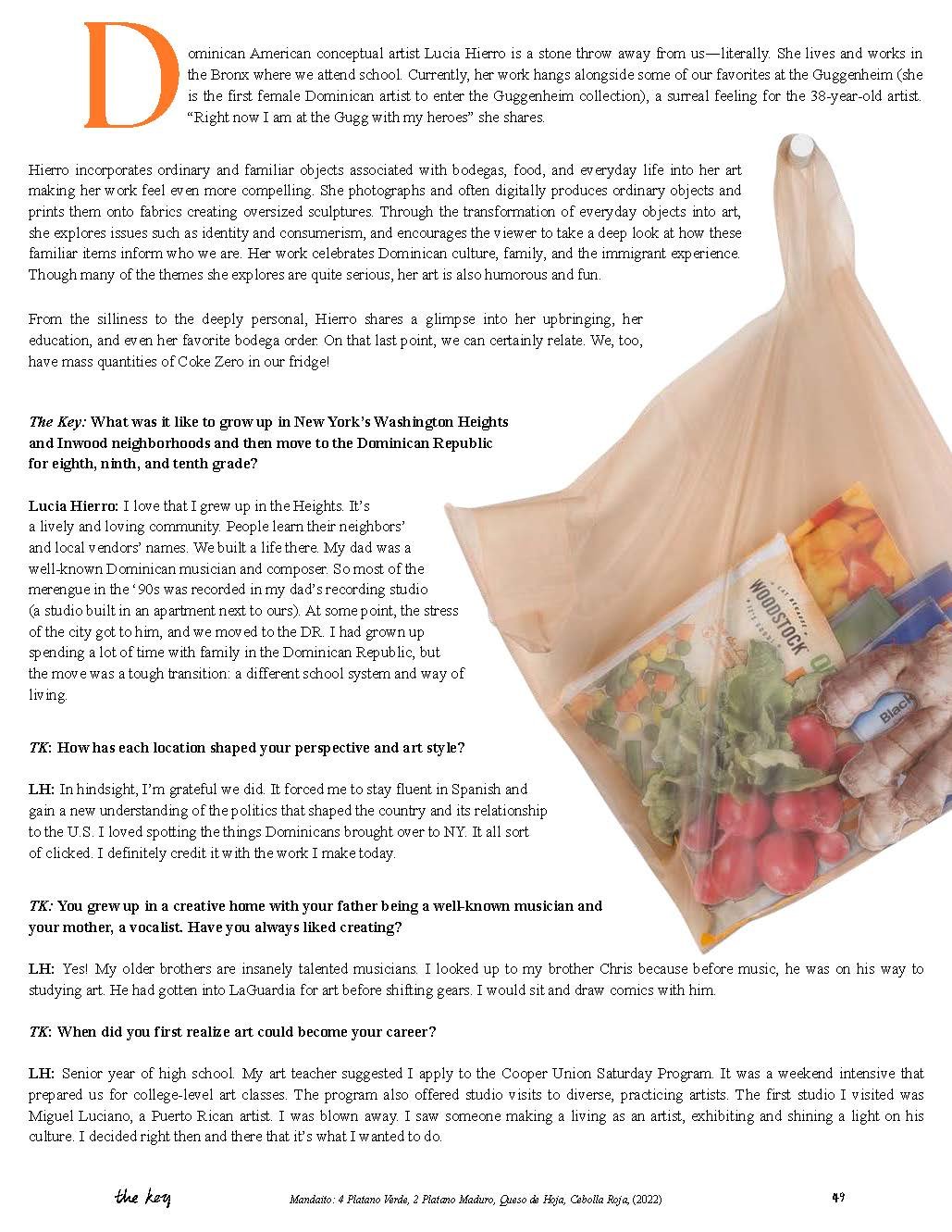
Hierro incorporates ordinary and familiar objects associated with bodegas, food, and everyday life into her art making her work feel even more compelling. She photographs and often digitally produces ordinary objects and prints them onto fabrics creating oversized sculptures. Through the transformation of everyday objects into art, she explores issues such as identity and consumerism, and encourages the viewer to take a deep look at how these familiar items inform who we are. Her work celebrates Dominican culture, family, and the immigrant experience. Though many of the themes she explores are quite serious, her art is also humorous and fun.
From the silliness to the deeply personal, Hierro shares a glimpse into her upbringing, her education, and even her favorite bodega order. On that last point, we can certainly relate. We, too, have mass quantities of Coke Zero in our fridge!
The Key: What was it like attending SUNY Purchase and Yale School of Art, and in what ways do you think they have prepared you for your career?
Lucia Hierro: Both are amazing programs. I love the school’s insistence on hiring the best professors. I think each program prepared me in its own way. Purchase was more skill-building. I learned printmaking, painting, color theory, and different sculpture techniques, and I took so many amazing social science and art history classes. It was a solid foundation. Yale was more about finding the medium that best communicated my ideas, maintaining a studio practice, and building community that feeds the work in the best ways. I developed the professional side through relationships with working artists. I understood how they made a living and balanced work and life. Art isn’t a one-size-fits-all model; it’s so individual, but those conversations helped me figure out what I wanted for my own career. Studio visits with visiting and permanent faculty helped me figure out where my work was lacking and what resources I could use to bring out the best in my ideas. Group chats with colleagues who were equally as invested in dedicating their lives to art were intense but really important; alongside theoretical classes, this helped shape the core of my practice today. Once you graduate, you have to rely on all those things coming together in the studio. Now I can look at work and ask myself hard questions about it and how it could be understood from different vantage points. I have a sense of how things could and can’t be read.
TK: You craft life-sized bodega items for a living. What is the idea behind that?
LH: Most of it came from wanting to monumentalize what feels overlooked. Scale to me is a way to zoom into the micro to understand the macro of it all. It pushes the viewer to keep looking at the world differently outside of the gallery or museum space. There’s also humor behind it. Some things are really just stupid objects … maybe it’s my way of making sense of the absurd. It calls attention to the fact that marginalized communities aren’t born; they are made.
TK: On a lighter note, what are your go-to items when you stop into a bodega?
LH: Ooo, Coke Zero, plantains, Dominican salami, Mamita’s ice cream (batata, passionfruit or coconut). To name a few. Sometimes I go in for coffee and chat with the Dominican owner; they add nutmeg to the coffee. By the way, never confuse a deli with a bodega … I just mentioned a few key differences in proprietorship and what they carry.
TK: Something unique about your work is that you use many different mediums and materials. How do you decide what medium you want to represent something in when you first get inspiration for a piece?
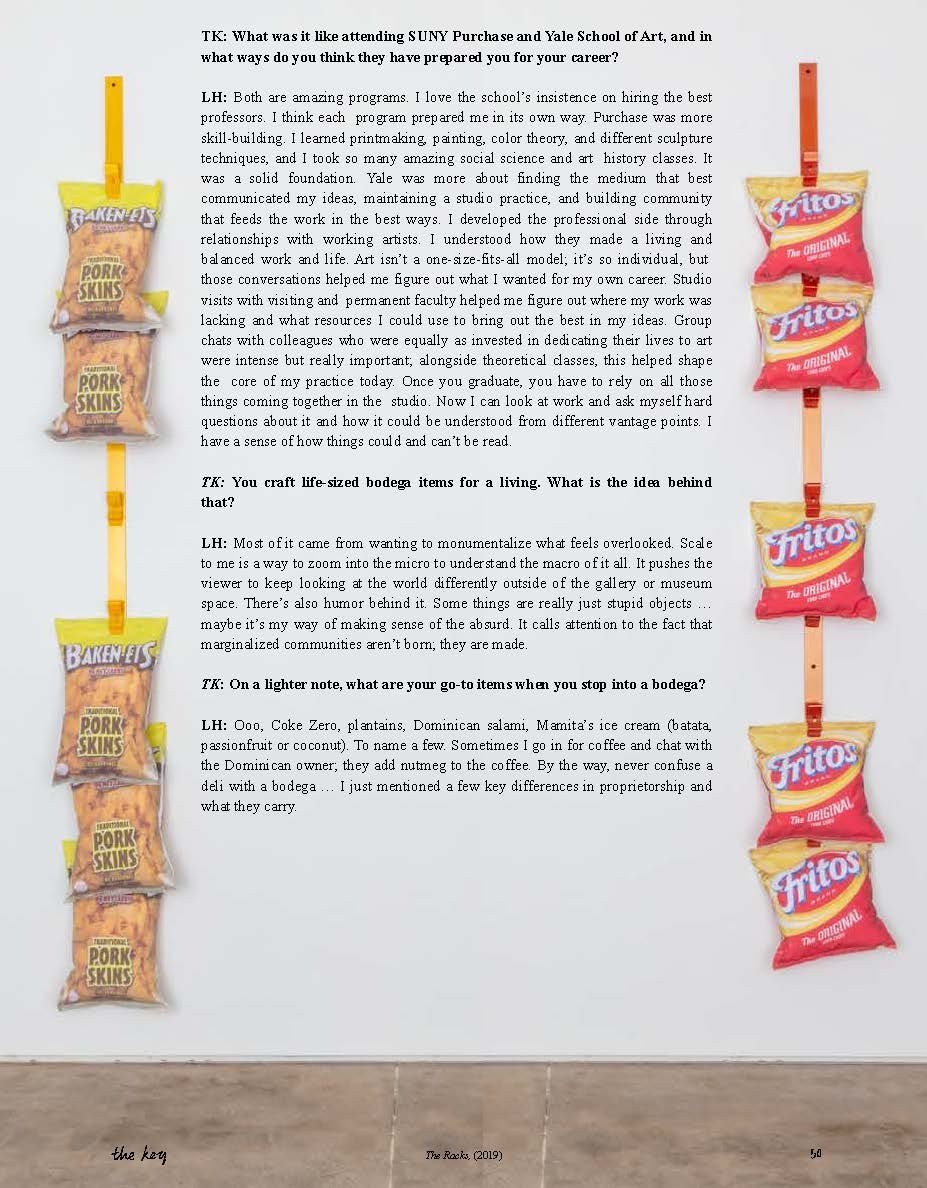
LH: For a little over a decade now, the medium has been digital print on fabric/soft sculpture. My mother came to America via the garment industry with her mother. She worked in factories that produced dresses for stores. It felt like the perfect process and material to build this world. There have been moments whe I've used industrial materials that speak to commercial advertisement printing and fabrication. Like in the case of The Racks. oversized versions of little chip racks you would bump into at the bodega, made out of powder-coated aluminum. I made those while at a residency in Detroit. It felt right to pair up with someone in the Rust Belt. Bringing together a process the state is known for (metalwork) with my soft works, I made the chip bags from digitally printed fabric and filled them with packing peanuts. With The Gates, I wanted to work with my dad’s cousin who is an iron worker. The collaborations and settings themselves became part of the work's narrative.
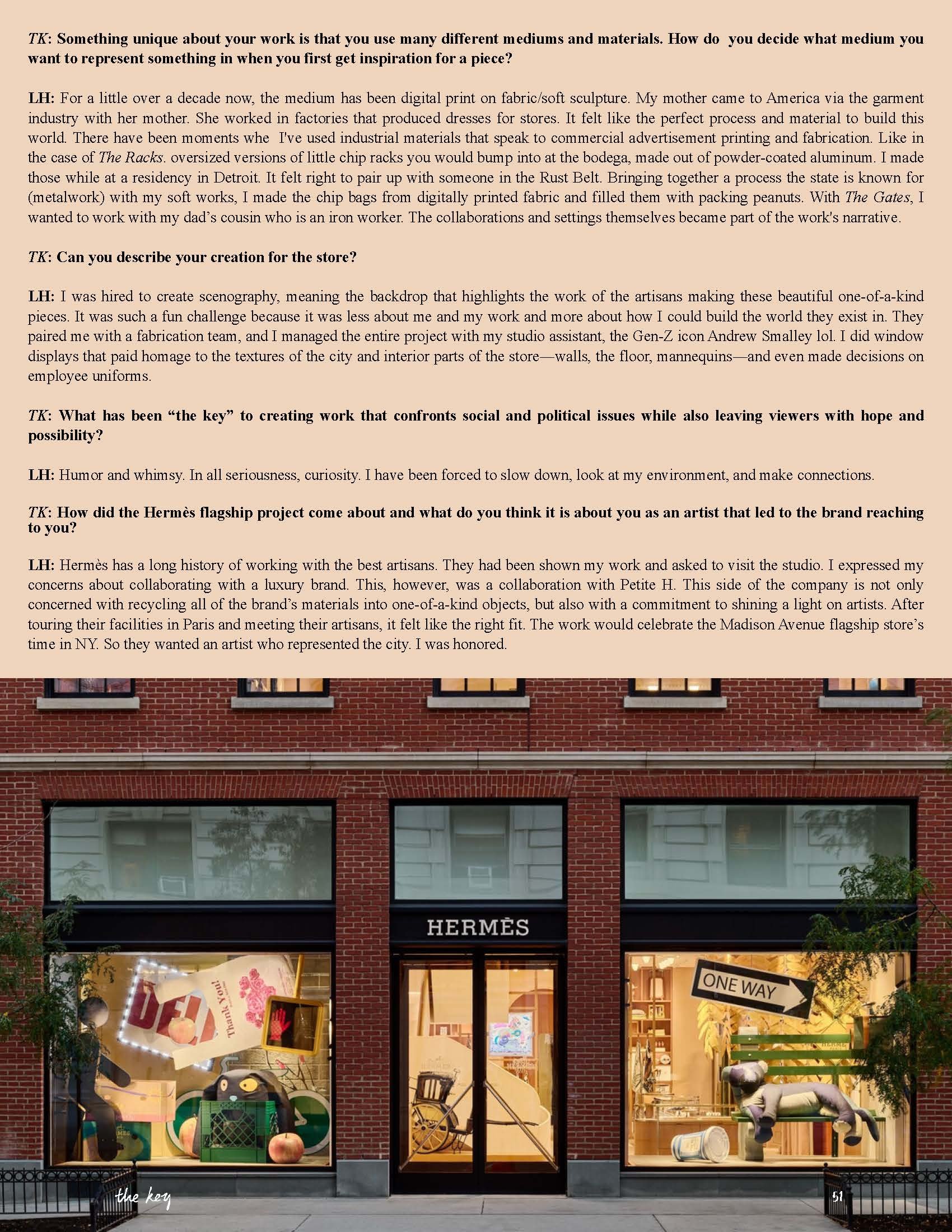
TK: Can you describe your creation for the store?
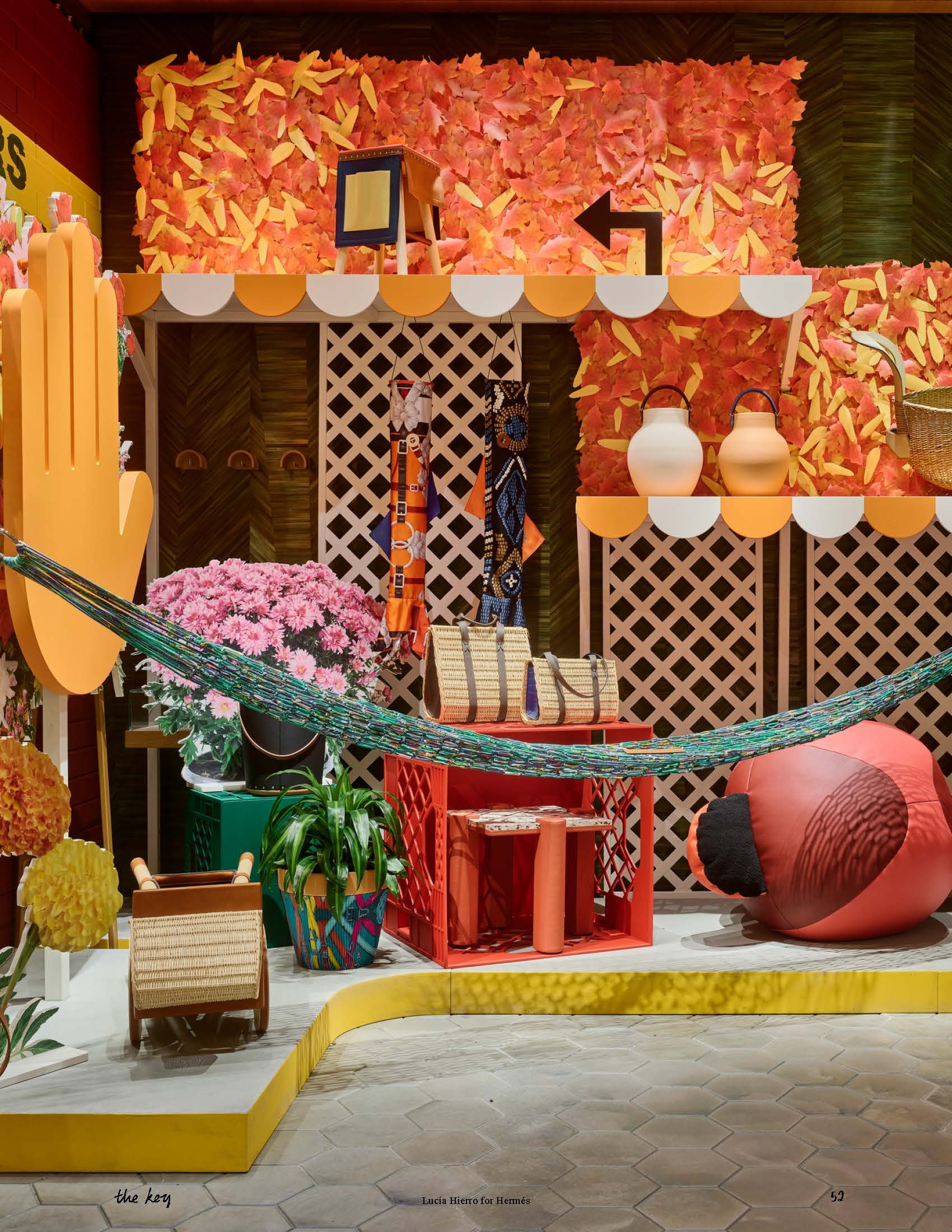
LH: I was hired to create scenography, meaning the backdrop that highlights the work of the artisans making these beautiful one-of-a-kind pieces. It was such a fun challenge because it was less about me and my work and more about how I could build the world they exist in. They paired me with a fabrication team, and I managed the entire project with my studio assistant, the Gen-Z icon Andrew Smalley lol. I did window displays that paid homage to the textures of the city and interior parts of the store―walls, the floor, mannequins―and even made decisions on employee uniforms.
TK: What has been “the key” to creating work that confronts social and political issues while also leaving viewers with hope and possibility?
LH: Humor and whimsy. In all seriousness, curiosity. I have been forced to slow down, look at my environment, and make connections.
TK: How did the Hermès flagship project come about and what do you think it is about you as an artist that led to the brand reaching to you?
LH: Hermès has a long history of working with the best artisans. They had been shown my work and asked to visit the studio. I expressed my concerns about collaborating with a luxury brand. This, however, was a collaboration with Petite H. This side of the company is not only concerned with recycling all of the brand’s materials into one-of-a-kind objects, but also with a commitment to shining a light on artists. After touring their facilities in Paris and meeting their artisans, it felt like the right fit. The work would celebrate the Madison Avenue flagship store’s time in NY. So they wanted an artist who represented the city. I was honored.
TK: What is your favorite exhibition you have ever done and why?
LH: That’s a tough one!! I love all of them. Right now I’m at the Gugg with my heroes. I think that’s pretty awesome!
TK: What upcoming projects are you looking forward to?
LH: I just landed in Puerto Rico. I will be doing a residency here, San Juan 721. I’m excited to make connections across PR/DR culture and the effects of colonialism. This past September, I showed a new series of works at the Armory Art Fair. Right now, I’m excited to live in Puerto Rico for a little bit and create from this beautiful place.
TK: What advice do you have for creative teenagers who might want to pursue a career in the arts?
LH: College and MFA programs are actually really important to an artist’s career; pick the absolute right one for where you see your life going. You can do that by visiting the campus, asking students if they are getting good things out of the program, and researching the faculty. I would also say being an artist and the art world are two different things; one will help you survive the other. It’s not an easy life; it demands a lot and continues to at every level. Having a side hustle is actually important, it will help ground the practice and subsidize it. Teaching positions for artists, made possible by a history of academia, continue to carry the tradition forward, so they shouldn’t be looked down upon. Getting to know yourself on a profound level, really going out and living life, having outside interests, is what makes a robust, well-rounded artist. Whoever learns the most art history wins.