
Selva
The Brand Leading the Brutalist Functional Art Movement and The Duo Behind One of Gaga’s Most Iconic Looks
Selva
The Brand Leading the Brutalist Functional Art Movement and The Duo Behind One of Gaga’s Most Iconic Looks
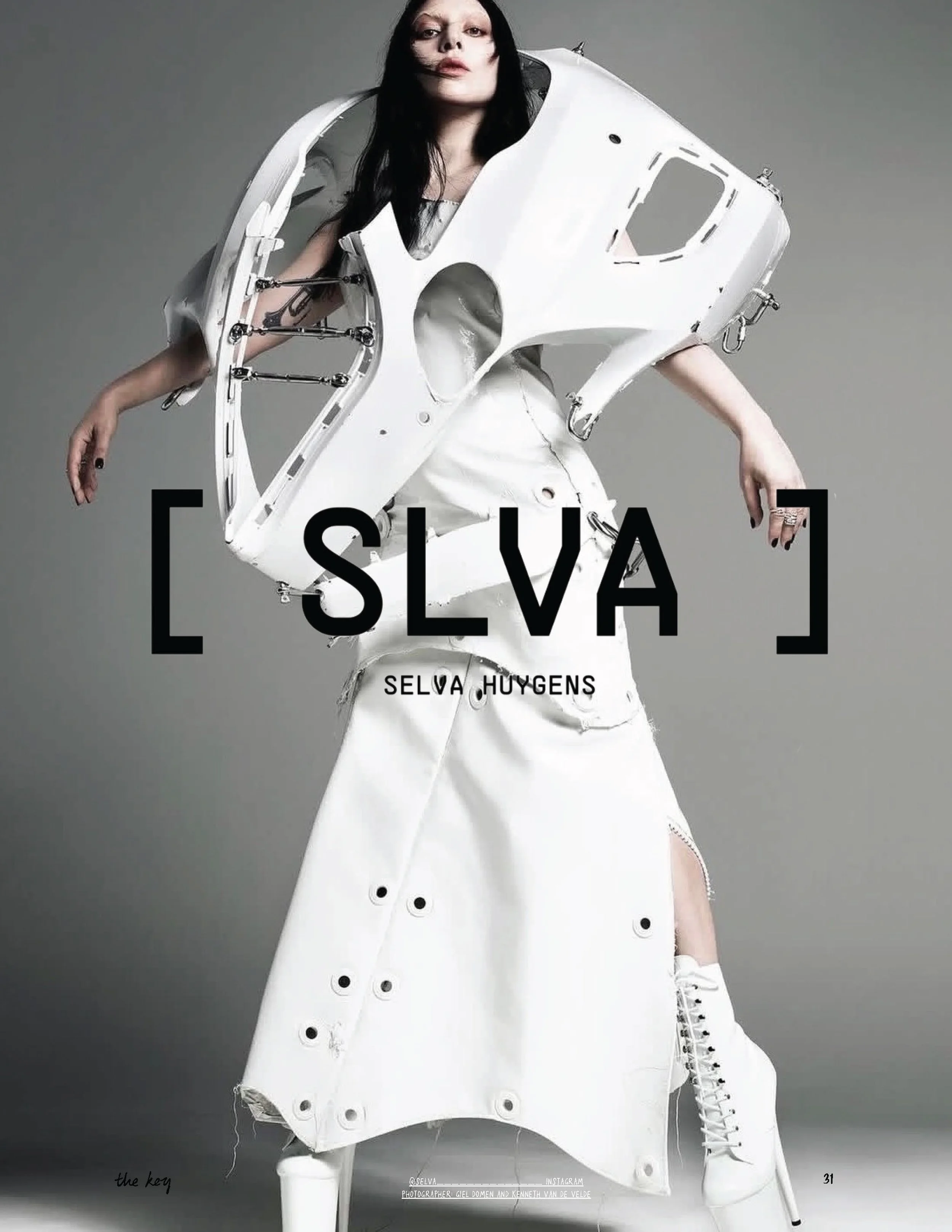
After the premiere of Lady Gaga: The Chromatica Ball, Gaga shared: “On the red carpet I told them it was a car part. They said, ‘what kind’ and I said, ‘I don’t know, I'm not a mechanic.’” The Key sat down with “the mechanics” Natalia Golubenko and Cristian Huygens, the duo behind the iconic look, to learn more about their Berlin-based brand Selva, sustainability and fabric made from upcycled car batteries. They shared the twists and turns that went into dressing Lady Gaga, how that moment almost went awry at the eleventh hour and so much more. The geniuses behind Selva push boundaries, and their words will inspire creatives in any realm.
The Key: To start, can you please just tell us a little bit about yourself, like where are you from and what brought you to Berlin?
Natalia Golubenko: I am Natalia. I’m originally Russian- Ukranian, so exactly half and half. I finished my education in Russia and moved to Germany in 2019. I changed many professions in the creative industry. I worked in media, art, film, I also worked in fashion, but not directly for the fashion brand, but mostly like model and also setting up some fashion events and so on. And then in 2024, early 2024, I met Cristian, and so we joined forces, decided to run the brand together and focus on ready-to-wear. At the moment, we are working hard in order to push our brand to grow it. We have showrooms and pop-ups and do fashion shows.
Cristian Huygens: I’m Cristian, originally from Buenos Aires, Argentina. I have a background in architecture, actually. I moved to Europe in 2016 to Denmark. I started a journey in Europe already ten years ago and mostly in the furniture design area. I moved to Europe in 2016 to Denmark. I started a journey in Europe already ten years ago and mostly in the furniture design area. I did an internship for Piet Hein Eek in the Netherlands about furniture, design and recycling furniture. Later I moved to Berlin and also in the art scene, making metal sculptures for the artists. That was the transition into fashion while doing that discipline.
TK: Where did the idea for Selva come from?
CH: Since the background comes from architecture, I was always into construction details and showing the construction details in every piece, and for the furniture. I was using recycling materials for the furniture. I was always using recycling materials from the street actually. I think that’s the main key, recycling materials and what they can inspire, then translating it to any discipline works exactly the same. That's why I believe that you can recognize the Selva aesthetic in whatever discipline I was doing before, furniture, painting, sculptures and fashion.
TK: What is the Brutalist Functional Art Movement?
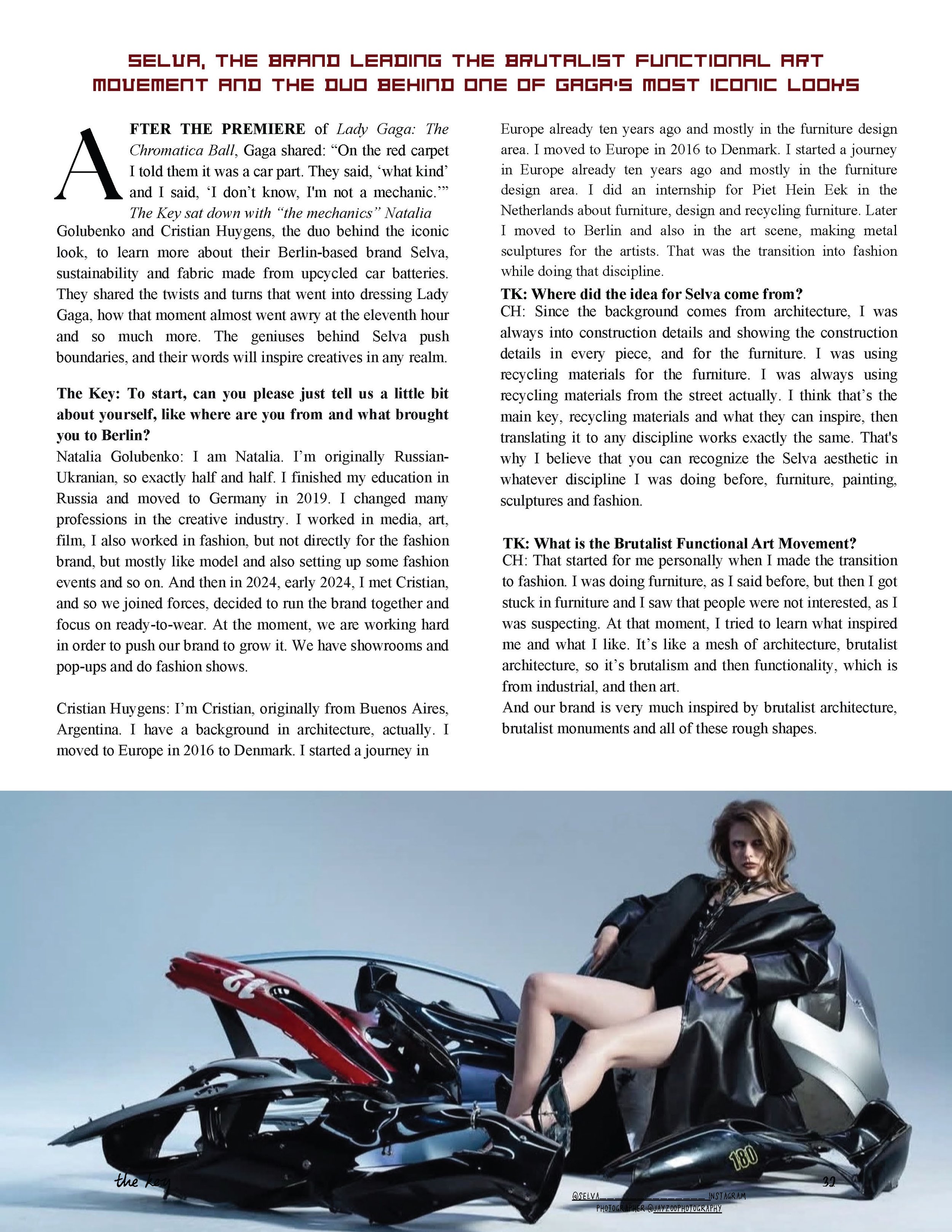
CH: That started for me personally when I made the transition to fashion. I was doing furniture, as I said before, but then I got stuck in furniture and I saw that people were not interested, as I was suspecting. At that moment, I tried to learn what inspired me and what I like. It’s like a mesh of architecture, brutalist architecture, so it’s brutalism and then functionality, which is from industrial, and then art.
And our brand is very much inspired by brutalist architecture, brutalist monuments and all of these rough shapes.
TK: How much time do you usually spend on each garment and what is your process like?
CH: It depends. It could take a week. It could take a few days. There’s a lot of experimenting, testing and making mistakes all the time. So not so much sketching, but already making the mistakes with the material and the process. Yeah, it’s just like that, sitting down and trying materials and designs. Basically making mistakes and keep on moving forward.
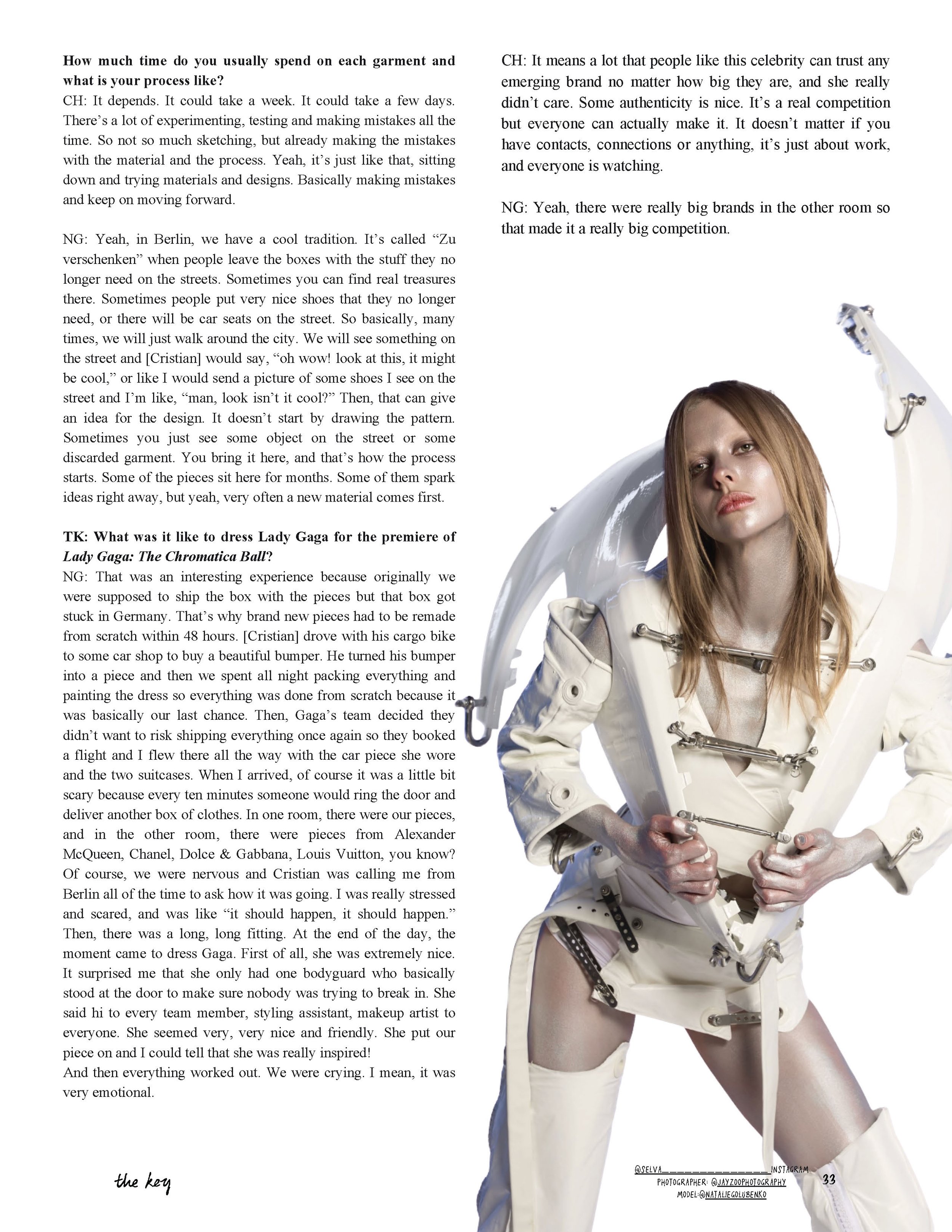
NG: Yeah, in Berlin, we have a cool tradition. It’s called “Zu verschenken” when people leave the boxes with the stuff they no longer need on the streets. Sometimes you can find real treasures there. Sometimes people put very nice shoes that they no longer need, or there will be car seats on the street. So basically, many times, we will just walk around the city. We will see something on the street and [Cristian] would say, “oh wow! look at this, it might be cool,” or like I would send a picture of some shoes I see on the street and I’m like, “man, look isn’t it cool?” Then, that can give an idea for the design. It doesn’t start by drawing the pattern. Sometimes you just see some object on the street or some discarded garment. You bring it here, and that’s how the process starts. Some of the pieces sit here for months. Some of them spark ideas right away, but yeah, very often a new material comes first.
TK: What was it like to dress Lady Gaga for the premiere of Lady Gaga: The Chromatica Ball?
NG: That was an interesting experience because originally we were supposed to ship the box with the pieces but that box got stuck in Germany. That’s why brand new pieces had to be remade from scratch within 48 hours. [Cristian] drove with his cargo bike to some car shop to buy a beautiful bumper. He turned his bumper into a piece and then we spent all night packing everything and painting the dress so everything was done from scratch because it was basically our last chance. Then, Gaga’s team decided they didn’t want to risk shipping everything once again so they booked a flight and I flew there all the way with the car piece she wore and the two suitcases. When I arrived, of course it was a little bit scary because every ten minutes someone would ring the door and deliver another box of clothes. In one room, there were our pieces, and in the other room, there were pieces from Alexander McQueen, Chanel, Dolce & Gabbana, Louis Vuitton, you know? Of course, we were nervous and Cristian was calling me from Berlin all of the time to ask how it was going. I was really stressed and scared, and was like “it should happen, it should happen.” Then, there was a long, long fitting. At the end of the day, the moment came to dress Gaga. First of all, she was extremely nice. It surprised me that she only had one bodyguard who basically stood at the door to make sure nobody was trying to break in. She said hi to every team member, styling assistant, makeup artist to everyone. She seemed very, very nice and friendly. She put our piece on and I could tell that she was really inspired!
And then everything worked out. We were crying. I mean, it was very emotional.
CH: It means a lot that people like this celebrity can trust any emerging brand no matter how big they are, and she really didn’t care. Some authenticity is nice. It’s a real competition but everyone can actually make it. It doesn’t matter if you have contacts, connections or anything, it’s just about work, and everyone is watching.
NG: Yeah, there were really big brands in the other room so that made it a really big competition.
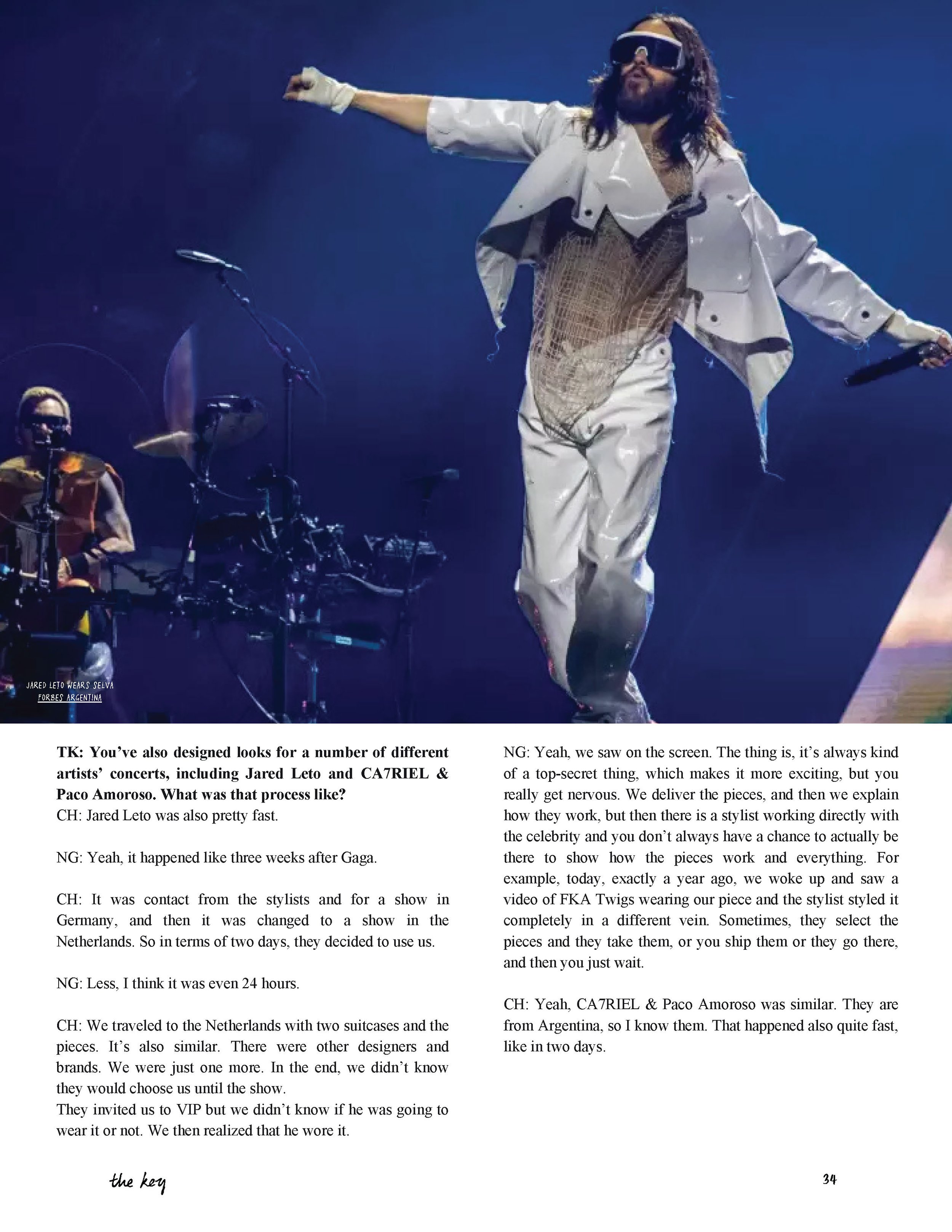
TK: You’ve also designed looks for a number of different artists’ concerts, including Jared Leto and CA7RIEL & Paco Amoroso. What was that process like?
CH: Jared Leto was also pretty fast.
NG: Yeah, it happened like three weeks after Gaga.
CH: It was contact from the stylists and for a show in Germany, and then it was changed to a show in the Netherlands. So in terms of two days, they decided to use us.
NG: Less, I think it was even 24 hours.
CH: We traveled to the Netherlands with two suitcases and the pieces. It’s also similar. There were other designers and brands. We were just one more. In the end, we didn’t know they would choose us until the show.
They invited us to VIP but we didn’t know if he was going to wear it or not. We then realized that he wore it.
NG: Yeah, we saw on the screen. The thing is, it’s always kind of a top-secret thing, which makes it more exciting, but you really get nervous. We deliver the pieces, and then we explain how they work, but then there is a stylist working directly with the celebrity and you don’t always have a chance to actually be there to show how the pieces work and everything. For example, today, exactly a year ago, we woke up and saw a video of FKA Twigs wearing our piece and the stylist styled it completely in a different vein. Sometimes, they select the pieces and they take them, or you ship them or they go there, and then you just wait.
CH: Yeah, CA7RIEL & Paco Amoroso was similar. They are from Argentina, so I know them. That happened also quite fast, like in two days.
TK: How do you think Selva is helping to shape the future of fashion as it becomes a more sustainable industry?
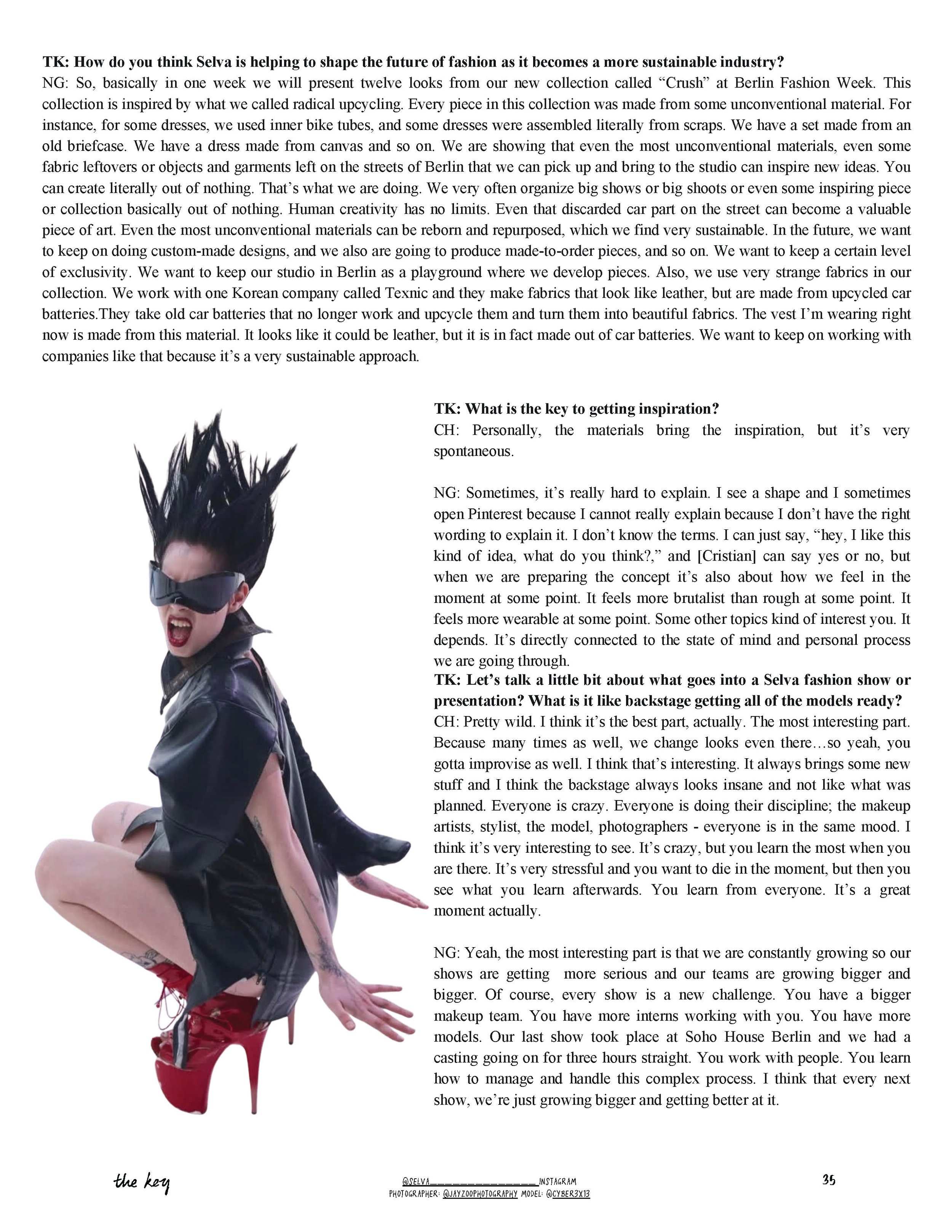
NG: So, basically in one week we will present twelve looks from our new collection called “Crush” at Berlin Fashion Week. This collection is inspired by what we called radical upcycling. Every piece in this collection was made from some unconventional material. For instance, for some dresses, we used inner bike tubes, and some dresses were assembled literally from scraps. We have a set made from an old briefcase. We have a dress made from canvas and so on. We are showing that even the most unconventional materials, even some fabric leftovers or objects and garments left on the streets of Berlin that we can pick up and bring to the studio can inspire new ideas. You can create literally out of nothing. That’s what we are doing. We very often organize big shows or big shoots or even some inspiring piece or collection basically out of nothing. Human creativity has no limits. Even that discarded car part on the street can become a valuable piece of art. Even the most unconventional materials can be reborn and repurposed, which we find very sustainable. In the future, we want to keep on doing custom-made designs, and we also are going to produce made-to-order pieces, and so on. We want to keep a certain level of exclusivity. We want to keep our studio in Berlin as a playground where we develop pieces. Also, we use very strange fabrics in our collection. We work with one Korean company called Texnic and they make fabrics that look like leather, but are made from upcycled car batteries.They take old car batteries that no longer work and upcycle them and turn them into beautiful fabrics. The vest I’m wearing right now is made from this material. It looks like it could be leather, but it is in fact made out of car batteries. We want to keep on working with companies like that because it’s a very sustainable approach.
TK: What is the key to getting inspiration?
CH: Personally, the materials bring the inspiration, but it’s very spontaneous.
NG: Sometimes, it’s really hard to explain. I see a shape and I sometimes open Pinterest because I cannot really explain because I don’t have the right wording to explain it. I don’t know the terms. I can just say, “hey, I like this kind of idea, what do you think?,” and [Cristian] can say yes or no, but when we are preparing the concept it’s also about how we feel in the moment at some point. It feels more brutalist than rough at some point. It feels more wearable at some point. Some other topics kind of interest you. It depends. It’s directly connected to the state of mind and personal process we are going through.
TK: Let’s talk a little bit about what goes into a Selva fashion show or presentation? What is it like backstage getting all of the models ready?
CH: Pretty wild. I think it’s the best part, actually. The most interesting part. Because many times as well, we change looks even there…so yeah, you gotta improvise as well. I think that’s interesting. It always brings some new stuff and I think the backstage always looks insane and not like what was planned. Everyone is crazy. Everyone is doing their discipline; the makeup artists, stylist, the model, photographers - everyone is in the same mood. I think it’s very interesting to see. It’s crazy, but you learn the most when you are there. It’s very stressful and you want to die in the moment, but then you see what you learn afterwards. You learn from everyone. It’s a great moment actually.
NG: Yeah, the most interesting part is that we are constantly growing so our shows are getting more serious and our teams are growing bigger and bigger. Of course, every show is a new challenge. You have a bigger makeup team. You have more interns working with you. You have more models. Our last show took place at Soho House Berlin and we had a casting going on for three hours straight. You work with people. You learn how to manage and handle this complex process. I think that every next show, we’re just growing bigger and getting better at it.
TK: What do you see in the future of Selva?
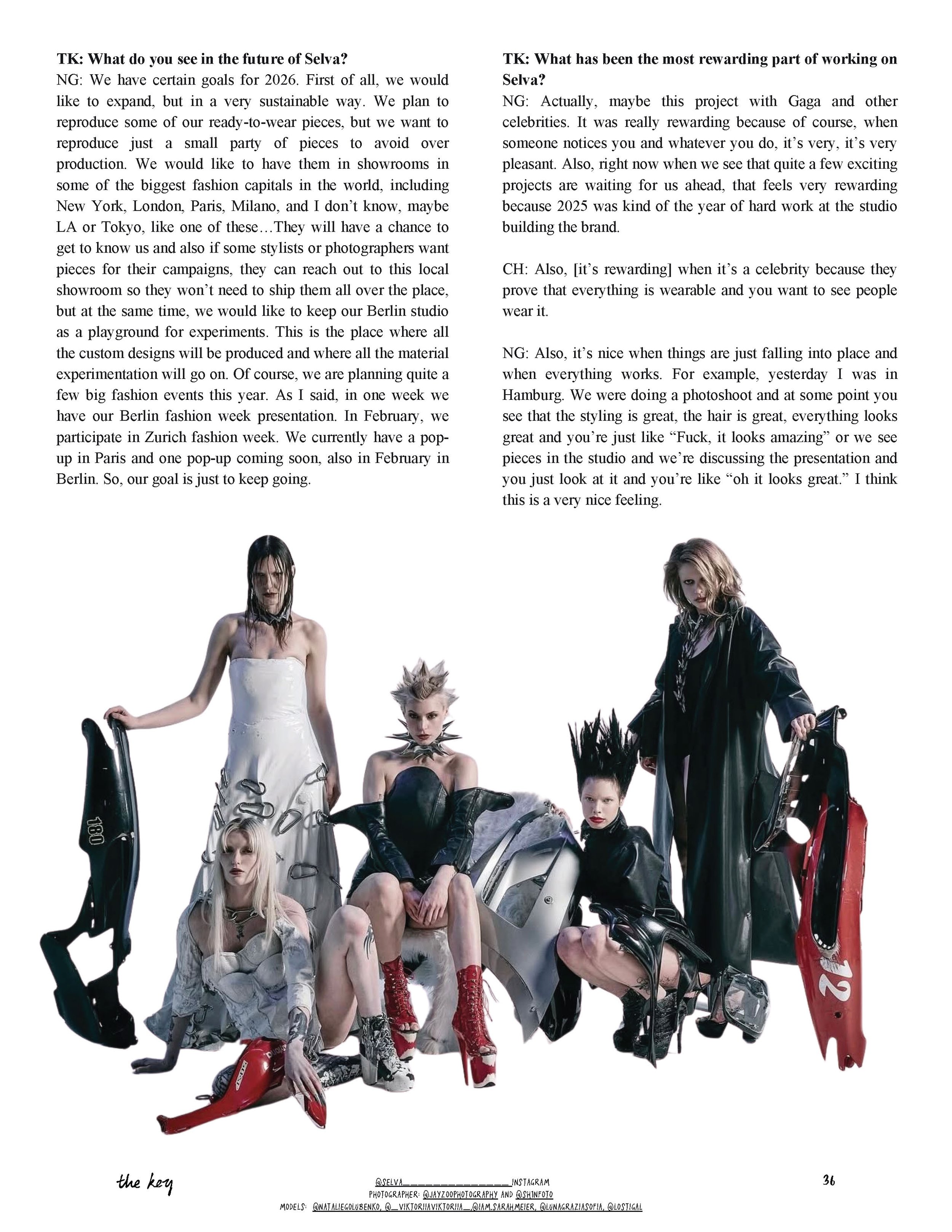
NG: We have certain goals for 2026. First of all, we would like to expand, but in a very sustainable way. We plan to reproduce some of our ready-to-wear pieces, but we want to reproduce just a small party of pieces to avoid over production. We would like to have them in showrooms in some of the biggest fashion capitals in the world, including New York, London, Paris, Milano, and I don’t know, maybe LA or Tokyo, like one of these…They will have a chance to get to know us and also if some stylists or photographers want pieces for their campaigns, they can reach out to this local showroom so they won’t need to ship them all over the place, but at the same time, we would like to keep our Berlin studio as a playground for experiments. This is the place where all the custom designs will be produced and where all the material experimentation will go on. Of course, we are planning quite a few big fashion events this year. As I said, in one week we have our Berlin fashion week presentation. In February, we participated in Zurich fashion week. We currently have a pop-up in Paris and one pop-up coming soon, also in February in Berlin. So, our goal is just to keep going.
TK: What has been the most rewarding part of working on Selva?
NG: Actually, maybe this project with Gaga and other celebrities. It was really rewarding because of course, when someone notices you and whatever you do, it’s very, very pleasant. Also, right now when we see that quite a few exciting projects are waiting for us ahead, that feels very rewarding because 2025 was kind of the year of hard work at the studio building the brand.
CH: Also, [it’s rewarding] when it’s a celebrity because they prove that everything is wearable and you want to see people wear it.
NG: Also, it’s nice when things are just falling into place and when everything works. For example, yesterday I was in Hamburg. We were doing a photoshoot and at some point you see that the styling is great, the hair is great, everything looks great and you’re just like “F**k, it looks amazing” or we see pieces in the studio and we’re discussing the presentation and you just look at it and you’re like “oh it looks great.” I think this is a very nice feeling.